

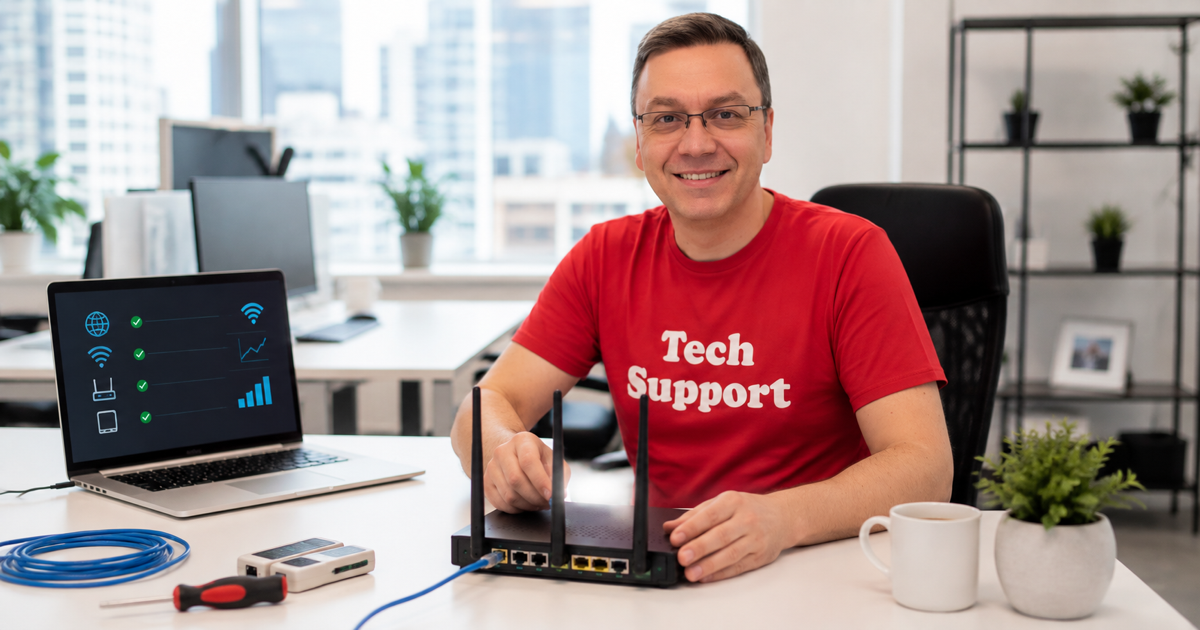
Port forwarding tells your router to send specific incoming internet traffic to one device inside your home network. It is useful for game servers, cameras, remote access, and home services, but it should be configured carefully.
Does this affect you?
Use this when a game, server, security camera, or app needs a port reachable from outside your home. If the device already uses a cloud service, you may not need port forwarding at all.
Set up port forwarding
The exact menu name varies, but the logic is the same across routers.
- Give the target device a fixed local address first. In the router, create a DHCP reservation under LAN, Network Settings, or Address Reservation.
- Open Port Forwarding, NAT Forwarding, Firewall, or Advanced settings.
- Add a new rule with a clear name.
- Enter the external port number or range required by the app, game, camera, or server.
- Enter the local IP address from the DHCP reservation.
- Choose TCP, UDP, or both according to the service instructions.
- Save the rule and restart the router if prompted.
- Test with the actual app or an online port-checking tool.
Fix port forwarding that still shows closed
One of these issues is usually responsible.
- Double NAT: if an ISP gateway and your own router both route traffic, forward on both or put the ISP device in bridge mode.
- Device firewall: Windows Firewall, antivirus, or the device itself may block the incoming port.
- Wrong local IP: if the device address changed, the rule points nowhere. Confirm the reservation and current IP.
- ISP blocking: residential providers sometimes block ports such as 25 or 80. Ask the provider if one port never opens.
More control
Open only what you need
Every forwarded port makes something reachable from the internet. Forward exact ports, avoid wide ranges, and delete old rules when you stop using them.
UPnP can open ports automatically
Universal Plug and Play lets some apps and consoles create rules on their own. It is convenient but gives you less control than manual rules.
Cloud access may be safer and easier
Many current cameras, consoles, and remote-access tools use manufacturer cloud routing so you do not have to expose a device directly from home. Check the official setup instructions first.
Sources
- FCC Consumer Guide – Wireless Network Troubleshooting (2024)
- Netgear Support – Set up port forwarding (2025)
- TP-Link Support – Configure port forwarding (2025)