

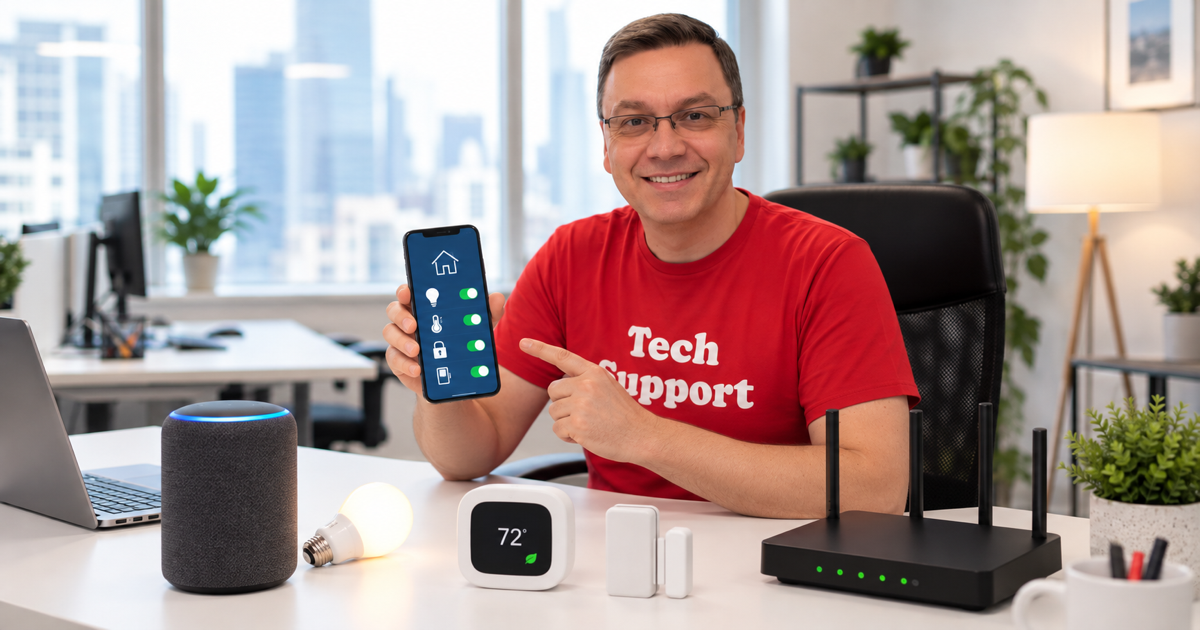
Home Assistant is a free, open-source smart home platform that you run on your own hardware. Instead of relying entirely on Alexa, Google, Apple, or Samsung cloud services, your smart home brain lives inside your house.
This guide applies to Home Assistant running on Home Assistant Green, Raspberry Pi, a mini PC, an old computer, or a virtual machine.
Does this affect you?
Use this if you own devices from several brands, want more local control, or keep hearing smart home enthusiasts recommend Home Assistant and want to know what you are getting into.
What makes it different from Alexa or Google Home
- It runs locally. Many automations and controls continue to work even when the internet is down, depending on the devices involved.
- It supports a huge number of integrations. Community and official integrations can connect brands that do not normally talk to each other.
- It takes more setup. There is no five-minute universal wizard for every device; you install the system, add integrations, and tune the dashboard.
- The software is free, but the hardware is not. You still need a Raspberry Pi, Home Assistant Green, mini PC, old computer, or other machine to run it.
The tradeoff is clear: more work up front, much more flexibility later, and less dependence on one company’s cloud staying available forever.
Get a basic setup running
- Choose hardware. Home Assistant Green is the easiest official box, Raspberry Pi is popular and inexpensive, and a mini PC is stronger for larger setups.
- Follow the official Home Assistant installation instructions for that hardware.
- For a Raspberry Pi, flash Home Assistant OS to an SD card or supported storage device.
- Connect the device to your network and open the local web address, commonly homeassistant.local:8123.
- Create the administrator account during onboarding.
- Review automatically discovered devices and integrations.
- For missing devices, open Settings > Devices & services > Add integration and search by brand.
Once setup is working, the dashboard gives you a single place to see devices and build automations. Home Assistant’s Lovelace dashboard can be customized with room cards, sensor graphs, buttons, and wall-panel layouts.
The Add-on Store can add extras such as backups, network tools, voice assistant features, and other services. Install only what you need; keeping the setup simple makes it easier to maintain.
If Alexa or Google Home already handles a few devices well, Home Assistant may be more effort than you need. It shines when you want multi-brand automations, local-first control, advanced dashboards, or the freedom to tinker.
Sources
- Home Assistant – Getting started documentation (2025)
- Home Assistant – Installation methods overview (2025)
- Nabu Casa – Home Assistant Green hardware guide (2025)