

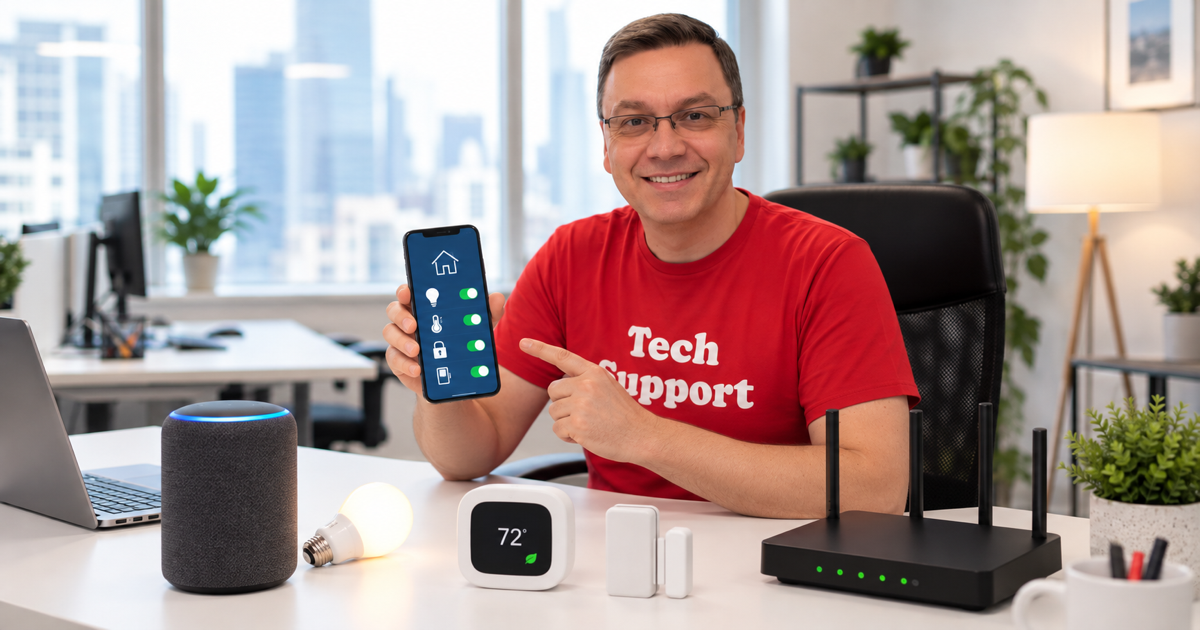
A smart display is basically a smart speaker with a touchscreen added. It still answers voice commands, sets timers, plays music, and controls devices, but it can also show information that would be awkward or impossible through audio alone.
This guide applies to Amazon Echo Show, Google Nest Hub, Nest Hub Max, and similar voice-assistant devices with built-in screens.
Does this affect you?
If you are deciding between a regular smart speaker and a screen-equipped model, the question is whether you will use the display for visual information, video, recipes, camera feeds, or quick touch controls. If not, a cheaper speaker may be enough.
What makes it a smart display instead of a smart speaker
The voice assistant is still the center of the device. The screen adds a second way to see and control what the assistant is doing.
- An Echo Show runs Alexa, and a Nest Hub runs Google Assistant. Most normal voice requests work the same way they do on an Echo or Nest speaker.
- The touchscreen shows weather graphics, timers, lists, album art, calendars, commute information, and search results instead of only reading them aloud.
- Many smart displays include a front camera for video calls and household check-ins. Some smaller or privacy-focused models skip the camera.
- The display can act as a simple smart home control panel, so you can tap a light, thermostat, lock, or camera tile instead of saying a command every time.
- When idle, most smart displays can show a clock, rotating photos, weather, or other glanceable information.
What the screen is useful for day to day
The screen is worth paying for when it fits a place where hands-free and glanceable information are genuinely helpful.
- Video calls and check-ins: Devices such as Echo Show and Nest Hub Max can handle video conversations, which is useful for family calls or quick room-to-room check-ins.
- Cooking: A kitchen smart display can show recipe steps, timers, photos, and videos while your hands are busy.
- Doorbell and camera feeds: Compatible cameras and video doorbells can display live views or recent clips without opening a phone app.
- Visual routines: A morning routine can show weather, calendar events, reminders, and commute details at once instead of reading each item in sequence.
- Photo frame mode: Google Photos, Amazon Photos, and similar services can turn the display into a counter or nightstand photo frame.
Because a smart display may have a camera pointed into a kitchen, bedroom, or living room, check whether the model has a physical shutter. Sliding a shutter over the lens is clearer than trusting a software toggle when you rarely use video calling.
Smaller displays around 4 to 7 inches work well as clocks, timers, and quick-glance screens. Larger 8 to 10 inch models are much better for video calls, recipes, and camera views, but they cost more and take up more counter space.
Buy for your ecosystem. Echo Show works best with Alexa devices and Ring/Amazon services. Nest Hub works best with Google Home, Google Photos, and Nest cameras. Mixing brands can still work for basic commands, but camera feeds and advanced routines are more reliable when the ecosystem matches.
Sources
- Amazon – Echo Show Devices Overview (2025)
- Google Store – About Google Nest Hub (2025)
- Consumer Reports – Smart Displays vs. Smart Speakers Explained (2025)