

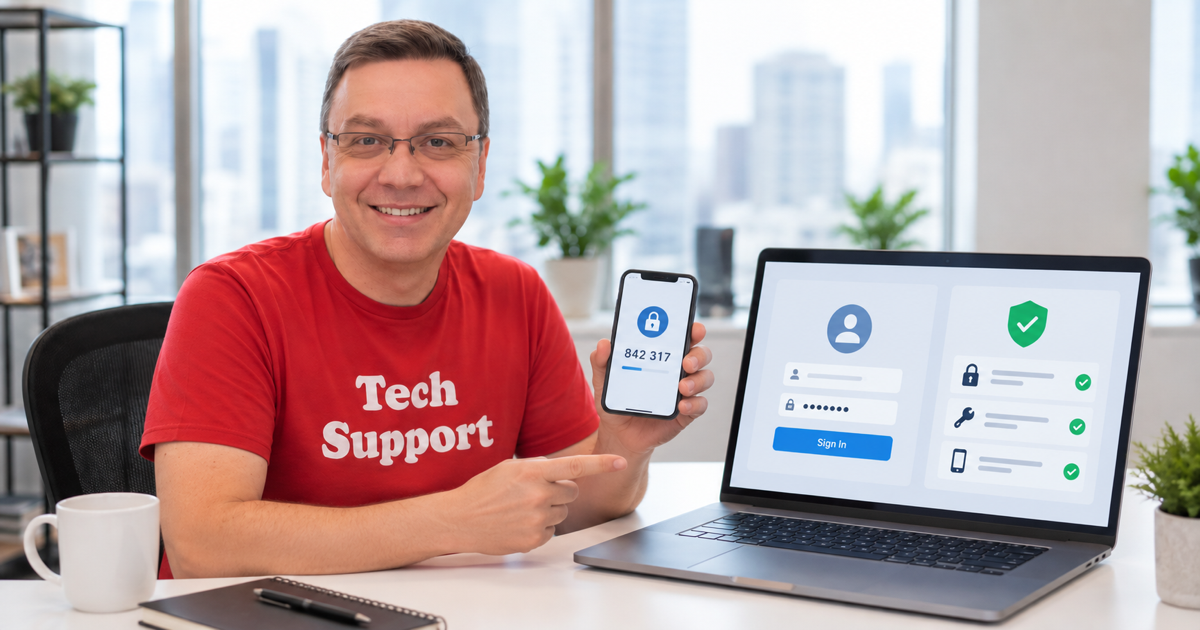
A password manager creates, stores, and fills strong passwords so every account can use a unique login. You remember one master password or unlock the vault with your device, and the manager handles the rest.
Does this affect you?
Use this if you have more than a few online accounts and are trying to stop reusing passwords or writing them down in unsafe places.
How a password manager works
The benefit is not just storage; it is letting each account have its own strong password.
- When you create an account, the manager offers a long random password instead of your usual one.
- It saves that password in an encrypted vault.
- The vault unlocks with a master password, biometric unlock, device PIN, or a combination depending on the manager.
- When you return to the site, the manager recognizes the domain and autofills the username and password.
- Because every site gets a different password, one company breach does not automatically endanger your other accounts.
- Most managers sync between phone, laptop, and tablet after you sign in securely.
Built-in manager or dedicated app
You probably already have a basic manager available.
- Apple devices include iCloud Keychain and Passwords. Chrome and Android include Google Password Manager. Edge and Windows include Microsoft password tools.
- Built-in managers are genuinely safer than reused passwords and are enough for many people in one ecosystem.
- Dedicated apps such as Bitwarden, 1Password, or Dashlane work more consistently across different browsers and operating systems.
- Dedicated managers also add features such as family sharing, secure notes, better organization, and detailed weak-password reports.
- If all your devices are Apple, or all Chrome and Android, built-in may be fine. If you mix an iPhone with Windows or several browsers, a dedicated manager can feel smoother.
More control
Protect the master password
The vault depends on one strong master password or device unlock. Make it long, unique, and memorable. Writing that one password down and storing it somewhere physically safe can be reasonable.
Run a security checkup
Most managers can scan for weak, reused, or breached passwords. Run the check after setup and replace the riskiest passwords first.
The tradeoff is worth it
Humans are bad at remembering dozens of unique strong passwords. One encrypted vault protected well is usually much safer than password reuse across many accounts.
Sources
- CISA – Use strong passwords (2025)
- NIST – Digital Identity Guidelines (2025)
- Google Safety Center – How Google Password Manager keeps your passwords safe (2025)