

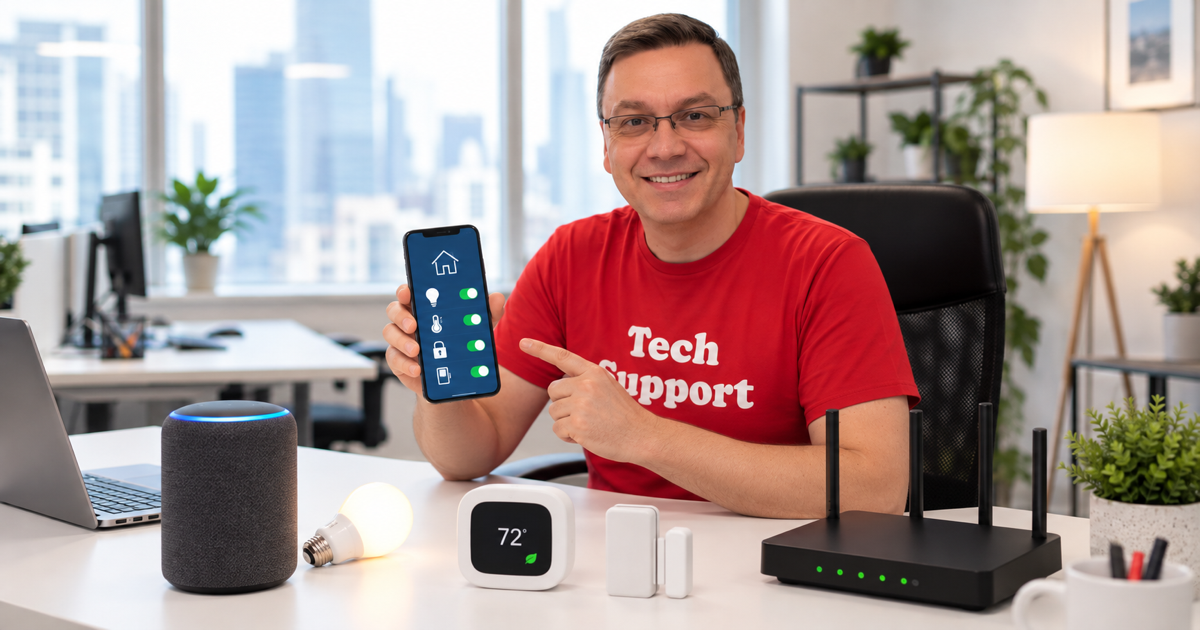
Smart home privacy concerns are not all hype, but they are not all the same either. A smart speaker, camera, thermostat, and plug collect different kinds of information, and each brand keeps and uses that data under its own privacy rules.
This guide applies broadly to smart speakers, displays, cameras, doorbells, and connected home devices from Amazon, Google, Apple, Ring, Samsung, Wyze, Eufy, Reolink, and similar brands.
Does this affect you?
If you use voice assistants, cameras, geofencing, smart routines, or cloud-connected devices, some household activity is being logged. The exact data depends on the product, but common categories include voice requests, camera events, motion alerts, device usage times, and location-based triggers that can reveal daily patterns.
What smart home devices actually collect
Each manufacturer handles data differently, but these are the main buckets to understand before you decide what to keep enabled.
- Voice clips: Smart speakers usually record a short audio clip after the wake word and send it to the cloud so the assistant can understand the command. Amazon and Google have historically offered voice history controls and deletion tools, while Apple emphasizes more on-device handling for many Siri requests. Amazon removed the newer Echo local-only voice recording opt-out in March 2025, so check current Alexa privacy settings instead of assuming local processing is available.
- Camera video and motion events: Video doorbells and security cameras may save motion-triggered clips, snapshots, or continuous recordings. Cloud recording is usually tied to a paid plan, while some Eufy, Wyze, Reolink, and similar models can save to a hub or microSD card.
- Usage patterns: Smart plugs, bulbs, locks, and thermostats can log when devices turn on, unlock, heat, cool, or go idle. Even without audio or video, this can sketch out when people are home, away, asleep, or active.
- Location information: Geofencing needs your phone location so routines can run when you arrive home or leave. Many people turn this on during setup and forget it remains active in the background.
- Third-party sharing: Some apps use device activity for product improvement, analytics, advertising, or partner services. The amount shared varies widely, and the clearest summary is often inside the app privacy screen rather than the full legal policy.
Practical steps to limit what is collected
You can reduce data collection without giving up the basic convenience that made the devices useful in the first place.
- Review and delete voice history. In Alexa, open More > Settings > Alexa Privacy > Review Voice History. For Google devices, open your Google Account > Data & privacy > My Activity. Use auto-delete options such as 3 or 18 months where available.
- Turn off training or product-improvement sharing. Look for settings that allow the company to use your recordings, transcripts, or device activity to improve the assistant. Disabling that option normally does not turn the assistant itself off.
- Choose local video storage when privacy matters most. Cameras with microSD cards, local hubs, or local-only modes keep more footage inside your home network unless you explicitly upload or share it.
- Put smart home devices on a guest or IoT Wi-Fi network. This limits what a compromised device can reach on your main laptops, phones, and storage devices.
- Use the physical microphone mute button. Major smart speakers and displays include a hardware mute switch or button, usually shown with a red light. Use it in rooms where private conversations happen often.
Even after privacy settings are tightened, companies may still access limited data for support, abuse review, system improvement, or legal requests. Those cases are usually described in the company privacy policy and transparency reports.
If law enforcement access is your main concern, compare transparency reports from Amazon, Google, Apple, and camera brands before buying. The number of requests and the way each company responds are not identical.
Children’s profiles and kid-focused devices may have extra limits under COPPA, but regular adult accounts do not automatically get those protections. During setup, read the shorter privacy labels or summary screens before tapping through them. They are often much easier to understand than the full policy.
Sources
- Amazon – Alexa Privacy Hub (2025)
- Google – Google Home Privacy and Data (2025)
- FTC Consumer Advice – Smart Devices and Your Privacy (2025)