

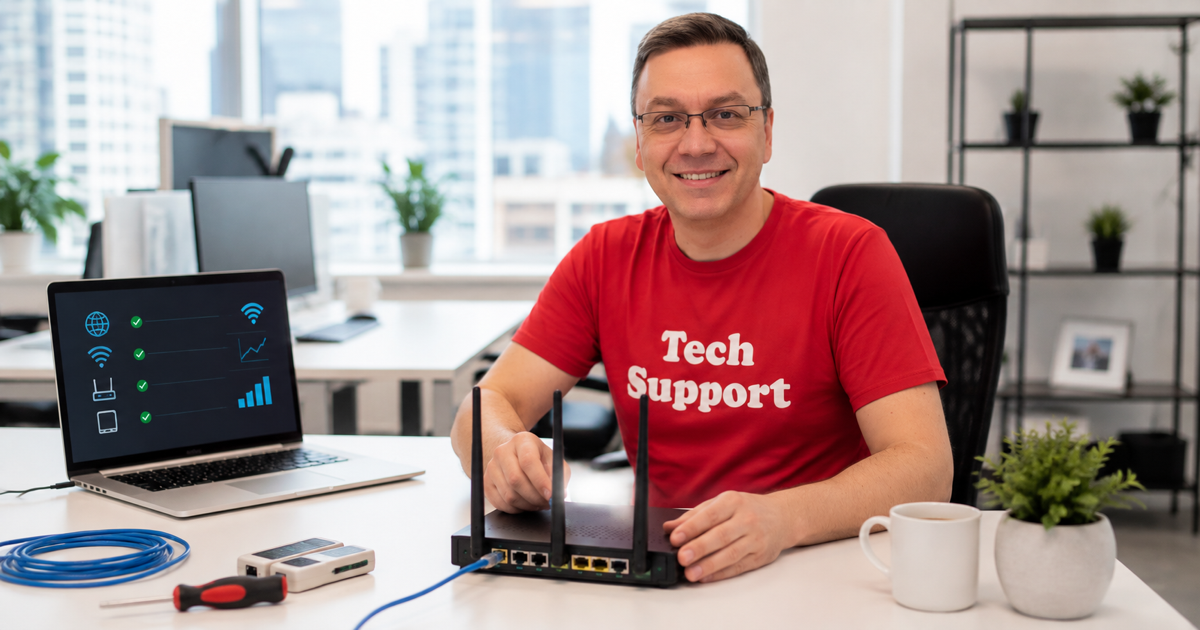
Dynamic DNS gives your changing home public IP address a stable hostname. Instead of remembering a number that can change, you use an address such as yourname.ddns.net that updates automatically.
Does this affect you?
Use this if you want to reach a home camera, game server, NAS, or remote-access service from outside your home and your ISP does not provide a static IP.
Set up DDNS on your router
Most consumer routers include a DDNS client.
- Create an account with a DDNS provider such as No-IP, DuckDNS, Dynu, or the provider built into your router.
- Choose a hostname.
- Log into your router admin page at 192.168.0.1 or 192.168.1.1.
- Open Dynamic DNS or DDNS, usually under Advanced Settings or WAN Settings.
- Select the provider from the list, or enter custom update server details if supported.
- Enter the hostname, username, and password or update token.
- Save. The router will report public IP changes to the DDNS provider.
- Test the hostname from a different network, such as a phone on cellular data.
More control
DDNS does not open ports
DDNS only keeps a name pointed at your current public IP. To reach a specific device from outside, you may still need port forwarding or a VPN.
Use an update client if the router lacks DDNS
Some providers offer software that runs on an always-on computer at home and updates the hostname when your IP changes.
CGNAT can block inbound access
If your ISP uses Carrier-Grade NAT, your router may not be reachable from the internet even with DDNS and port forwarding. Ask the ISP about a public IP or static IP option.
Cloud apps may be easier
Many cameras and smart devices provide remote access through their own cloud service, avoiding DDNS and exposed ports entirely.
Sources
- No-IP Support – What is Dynamic DNS? (2025)
- Netgear Support – Set up Dynamic DNS (2025)
- DynDNS Oracle Dyn – How Dynamic DNS Works (2024)