

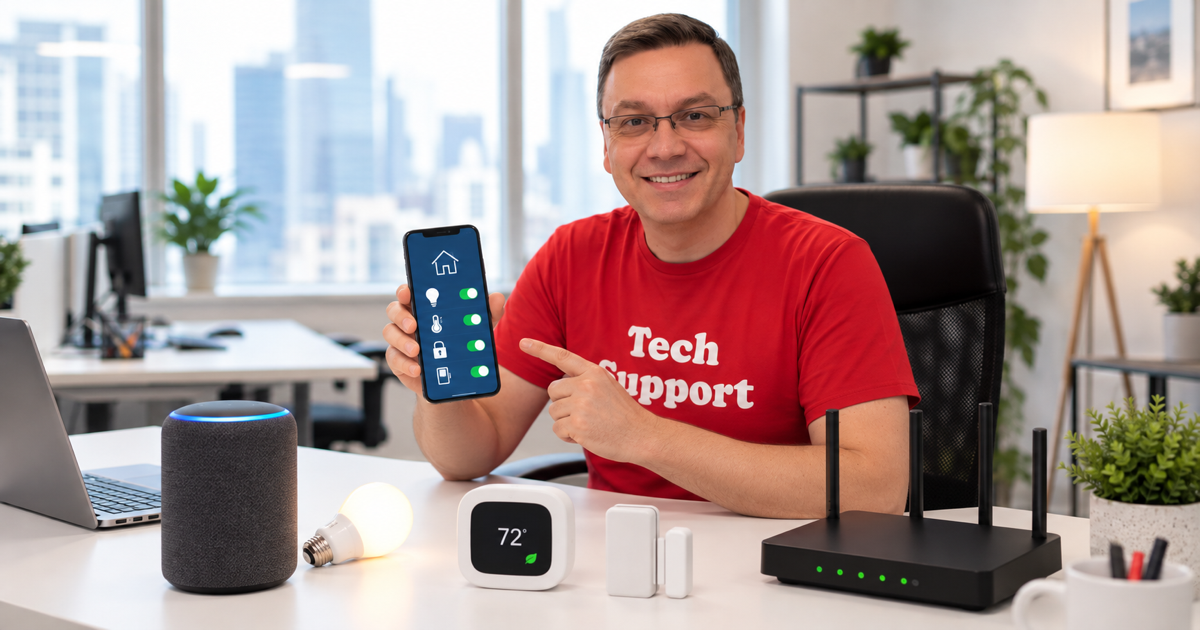
Smart-home devices can become weak points because many are cheaper, less powerful, and updated less often than phones and computers. A few router settings reduce that risk a lot.
These steps apply to homes with Wi-Fi smart speakers, cameras, plugs, bulbs, locks, hubs, and similar devices on any router with basic security settings.
Does this affect you?
Use this if you have several smart devices and want to keep one compromised plug, camera, or bulb from reaching your computer, phone, or private files.
Put smart devices on their own network
A separate guest or IoT network limits what smart devices can talk to inside your home.
- Open your router app or admin page.
- Look for Guest Network, IoT Network, or a similar feature.
- Turn it on.
- Give it a distinct Wi-Fi name and a strong unique password.
- Enable client isolation or guest isolation if the router offers it.
- Connect plugs, bulbs, cameras, and other smart devices to that network.
- Keep phones, laptops, and work computers on your main network.
The isolation setting is the real security improvement. A second network name without isolation may not prevent devices from reaching each other.
Harden the router and device accounts
- Change the router admin password from the default.
- Use WPA3 if all important devices support it, or WPA2 at minimum.
- Avoid WEP and old WPA-only security modes.
- Turn on automatic router firmware updates if available.
- Use a unique password for each smart-home device account.
- Turn off UPnP unless you know you need it for a specific device or app.
The router admin password is not the same as your Wi-Fi password. It protects the settings page itself, and leaving it on a default such as admin/admin is a serious mistake.
Review devices and replace abandoned gear
Check the router’s connected-device list every few months. It may be called Network Map, Connected Devices, or Clients. Remove or investigate anything you do not recognize.
If a device seems suspicious, disconnect that device from Wi-Fi or unplug it while you investigate. A full router reset should be a last resort, not the first move.
Smart devices that no longer receive firmware updates become riskier over time. Prioritize replacing unsupported cameras, locks, and other security-sensitive devices.
A password manager makes unique passwords realistic when your home has ten different device accounts. The built-in manager on your phone or browser is far better than reusing one password everywhere.
Sources
- FTC Consumer Advice – Securing your home network (2025)
- CISA – Securing wireless networks (2024)
- Wi-Fi Alliance – WPA3 security (2025)