

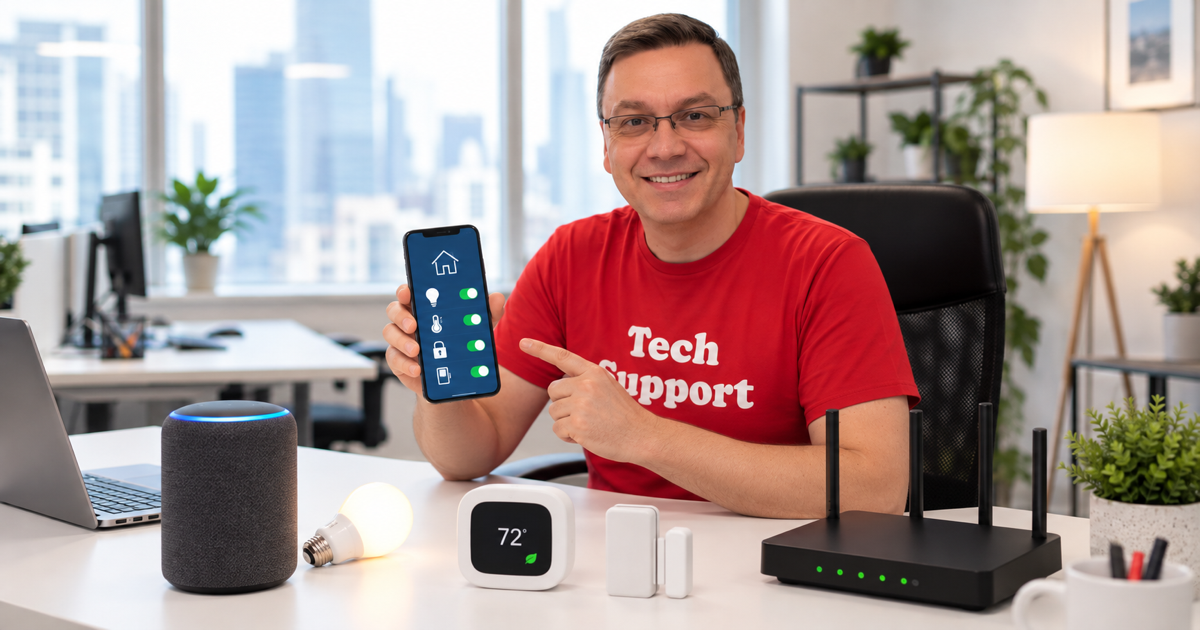
Alexa-enabled Echo devices do listen locally for the wake word, but they are not supposed to continuously record and send every conversation to Amazon. The important distinction is local wake-word detection versus cloud processing after Alexa thinks it heard its name.
This applies to Echo speakers, Echo Show displays, and other Alexa-enabled devices.
Does this affect you?
Use this if you are deciding where to place an Echo, why a blue ring appeared, or how much privacy control you have over Alexa voice history.
How wake-word detection works
An Echo keeps its microphones active so it can detect a wake word such as Alexa, Echo, Amazon, or Computer.
- The device analyzes sound locally for the wake word.
- A short rolling audio buffer is continually overwritten while the device waits.
- When the wake word is detected, the device begins sending audio to Amazon’s cloud so the request can be processed.
- The blue light ring or on-screen indicator shows that Alexa is actively listening or responding.
- After the request ends, streaming should stop until another wake word or enabled sound-detection feature is triggered.
That design means the microphone is always active for local detection, but routine household conversations are not meant to be uploaded unless Alexa wakes.
The fair privacy concerns
There are real reasons people still choose to be cautious.
- False wakes happen when the device mishears a similar word or phrase.
- A false wake can send a brief unintended audio clip for processing.
- Reporting in 2019 showed that Amazon workers reviewed some Alexa recordings for quality improvement, which led to clearer review and opt-out controls.
- Some Alexa features listen for specific sounds, such as alarms or glass breaking, when enabled.
- Third-party skills can request permissions such as location, shopping-list access, or account linking.
Those concerns do not mean Alexa is transcribing everything all day. They do mean you should review settings, skill permissions, and placement if privacy matters in a room.
Control Alexa privacy settings
- Open the Alexa app.
- Go to More > Settings > Alexa Privacy.
- Review voice history and delete recordings you do not want kept.
- Change how long recordings are saved.
- Turn off use of voice recordings for improvement or human review if the option appears in your account.
- Review enabled skills and remove any you do not recognize.
For the strongest simple control, press the physical microphone-off button. On Echo devices, that button disables the microphone hardware until you turn it back on, and the device shows a red light or indicator.
The blue ring is a useful sign that Alexa is actively listening or transmitting a request. For sensitive bedrooms, offices, therapy rooms, or meetings, the practical choice is to mute the mic or keep the device out of the room.
Sources
- Amazon Alexa Help – How Alexa devices work (2025)
- Amazon Alexa Privacy Hub (2025)
- Reuters – Amazon workers reviewed Alexa recordings report (2019)