

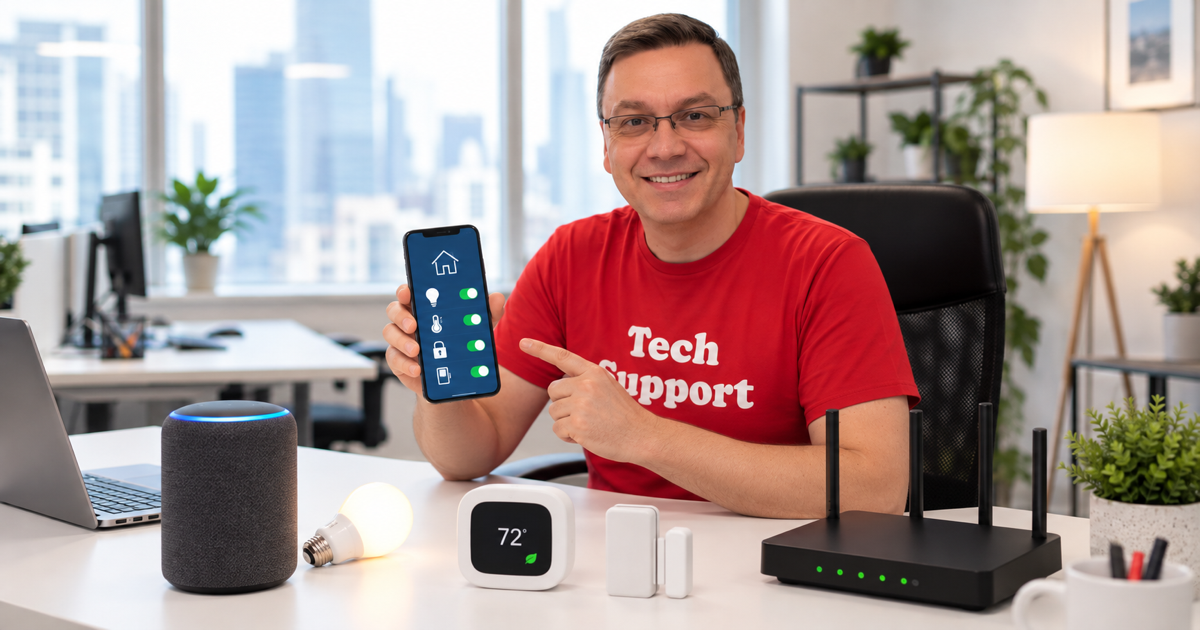
The easiest smart home mistake is buying too much from too many brands before you know what you will actually use. Start with two or three simple devices, learn the app, then expand.
This guide applies to new smart homes using Alexa, Google Home, Apple HomeKit, or Matter-compatible devices.
Does this affect you?
Use this if you want to try smart home gear without wasting money or creating a pile of apps that do not work together.
Start with these four device types
These beginner devices are useful, inexpensive, and usually do not need a separate hub.
- A smart speaker or smart display gives you voice control and becomes the main control point. Echo Dot, Google Nest Mini, and HomePod mini are common entry points.
- A smart plug is the lowest-risk first device. Use it with a lamp, fan, or small appliance that has a physical on/off switch.
- A smart bulb is easy for a lamp, entry light, or bedroom light. Start with one or two before replacing a whole room.
- A video doorbell or indoor camera is useful if security monitoring matters, but it costs more and may involve a subscription.
A simple first automation, such as turning on an entry light at sunset or turning off a living room lamp at 11 PM, shows the real value beyond voice control.
What to hold off on buying first
These can be useful later, but beginners do not need the extra complexity immediately.
- A dedicated Zigbee, Z-Wave, or SmartThings-style hub is unnecessary until a device specifically requires it.
- Smart locks and garage door controllers affect security and may involve hardware or wiring.
- Whole-home lighting replacements are expensive and can lock you into a brand too soon.
- Robot vacuums and smart appliances are useful but larger purchases with very different app quality.
- Too many brands at once can scatter controls across separate apps.
Choose one ecosystem first, or buy Matter-compatible devices when possible. That keeps devices from becoming isolated in apps that cannot share routines.
Brand and setup advice
Well-known brands usually have better apps, longer firmware support, and less risk of cloud shutdown than very cheap no-name plugs and bulbs.
Amazon Basics, Kasa, Philips Hue, Wyze, Google, Wemo, and similar mainstream brands are safer starting points than unknown devices with little support.
The first setup takes the longest because you are making accounts and learning the app. After that, adding more devices usually follows the same pattern: add device, connect Wi-Fi, name it clearly, then add it to a room.
Sources
- Amazon – Alexa Compatible Smart Home Devices (2025)
- Google – Getting Started With Google Home (2025)
- Consumer Reports – Smart Home Buying Guide (2025)