

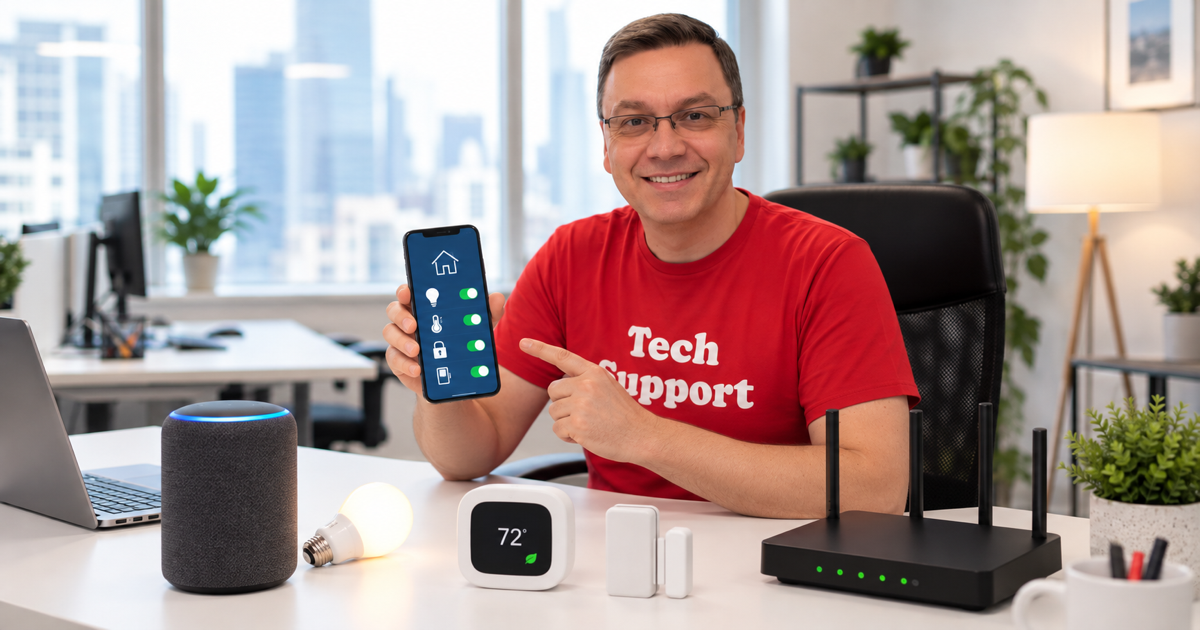
A smart hub is the device that helps smart home gadgets talk to each other when they do not all use the same wireless technology or app. It can make a growing collection of lights, sensors, plugs, locks, and routines feel like one system instead of several separate apps.
This guide applies across Amazon Alexa, Google Home, Apple Home, Samsung SmartThings, Matter, Thread, Zigbee, Z-Wave, and other common smart home setups.
Does this affect you?
If you only own a few Wi-Fi plugs or cameras, you may not need a hub at all. If you are adding battery sensors, smart locks, multi-brand automations, Zigbee devices, Z-Wave devices, or Thread devices, a hub or border router may become the part that makes everything work smoothly.
What a smart hub actually does
A hub is mainly a translator and coordinator. Remote app control is only part of the story.
- Many battery-powered smart home devices avoid regular Wi-Fi because Wi-Fi uses more power. Instead, they may use Zigbee, Z-Wave, or Thread.
- Your phone and normal router usually cannot talk directly to Zigbee or Z-Wave devices. A hub speaks that device language locally, then connects back to your app over Wi-Fi, Ethernet, or the internet.
- A hub can also coordinate local automations, such as a contact sensor turning on a light, without every step needing to travel through a cloud server.
- Common hub examples include Samsung SmartThings Hub, Echo devices with built-in smart home hubs, Apple HomePod mini, Apple TV, and Google Nest Hub models with Thread support.
Decide whether you actually need one
Not every smart home needs a dedicated hub on day one.
- You probably do not need a hub if all your devices connect directly to Wi-Fi and you are happy using their apps.
- You do need a compatible hub when a lock, sensor, switch, or bulb says Requires hub, Works with Zigbee hub, Requires Z-Wave controller, or similar on the box.
- A hub becomes more useful when devices from different brands need to trigger each other reliably.
- If you are starting fresh, a speaker or display with hub features built in can be smarter than buying a separate hub box.
Matter is a shared compatibility standard backed by major smart home companies. A Matter device is meant to work with Alexa, Google Home, Apple Home, SmartThings, and other supported ecosystems without needing a separate brand-specific workaround.
Thread is different from Matter. Thread is a low-power local wireless network, similar in purpose to Zigbee or Z-Wave. Matter is the compatibility language many newer devices use on top of Wi-Fi, Ethernet, or Thread.
A Thread device needs a Thread border router somewhere in the home to connect that Thread network back to Wi-Fi and the internet. This does not always mean buying a separate box. Newer Echo devices, Google Nest Hub devices, HomePod mini, and Apple TV 4K models may include that border router function.
In practice, if you are buying new gear, looking for the Matter logo is the easiest first filter. You do not need to memorize every protocol, but you should still check whether your existing app, speaker, hub, or border router supports the device before buying.
Sources
- Connectivity Standards Alliance – About Matter (2025)
- Google Nest Help – What Is a Smart Home Hub (2025)
- Samsung SmartThings Support – How SmartThings Works (2025)