

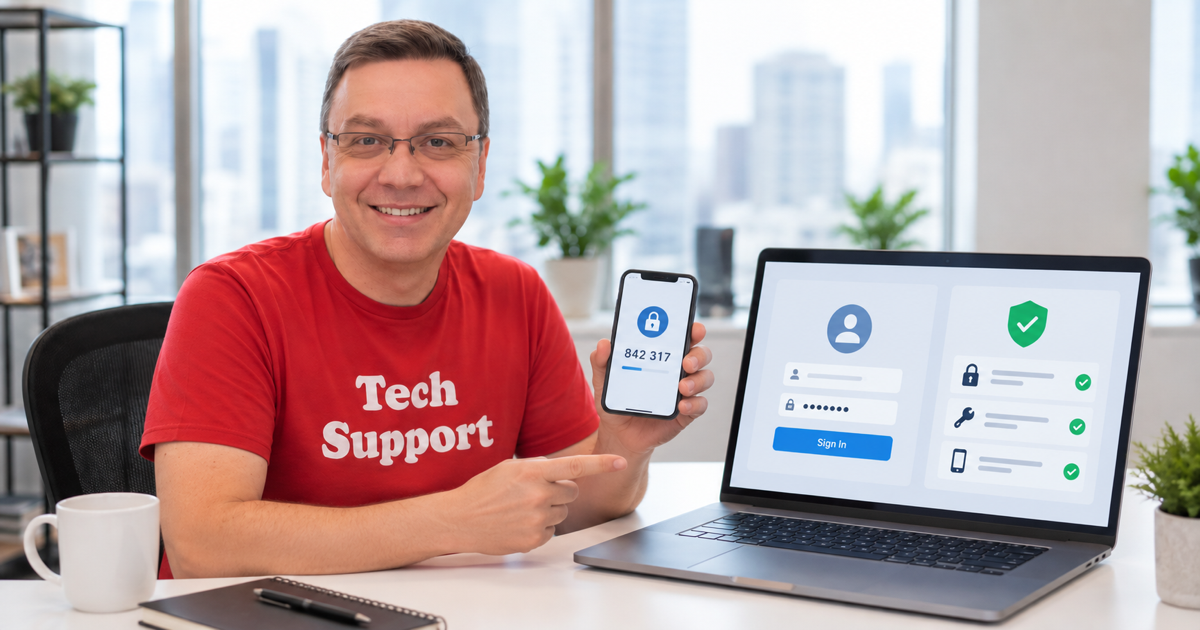
Browser password saving is safer than many people assume, especially compared with reusing one password everywhere or keeping passwords in an unprotected note. The catch is that the safety depends heavily on the device and account around the browser.
Does this affect you?
Use this for Chrome, Safari, Firefox, or Edge on phones and computers when the browser offers to save a password and you want to know whether accepting is a good idea.
Usually yes, if two things are true
The password vault is not the weak point for most people. The surrounding access controls are.
- Modern browsers encrypt saved passwords instead of storing them as plain readable text. Copying a browser file is not enough to casually read the passwords.
- Your device must have a lock screen, such as a PIN, password, fingerprint, or face unlock. If someone can use your unlocked laptop or phone, they may be able to autofill or view saved passwords.
- The account that syncs passwords, such as your Google Account, Apple ID, Firefox account, or Microsoft account, needs a strong unique password.
- Turn on two-factor authentication for that sync account. If it controls password syncing, it deserves stronger protection than an ordinary login.
- With those protections in place, saving unique passwords in the browser is a reasonable and much safer baseline than memorizing one reused password.
Where browser password saving is weaker
These are the situations where a browser vault may not be enough.
- Malware on the computer can target saved browser passwords. Any infected device puts credentials at risk, whether you use the browser vault or a separate manager.
- Public or shared computers are not safe places to save passwords. Never save a password on a library computer, hotel business-center PC, school lab machine, or shared family login.
- Browser syncing can be awkward across ecosystems. Chrome passwords are easiest in Chrome, Safari passwords are easiest on Apple devices, and switching between browsers can get inconsistent.
- Browsers usually have fewer advanced features than dedicated password managers, such as secure family sharing, vault organization, emergency access, or encrypted notes.
More control
Lock the device first
The biggest practical factor is whether your phone, laptop, and browser account all require a real unlock method. Set that up before relying on saved passwords for banks, email, or work accounts.
Run the built-in password checkup
Chrome Password Manager, Safari Passwords, Firefox, and Edge all include some form of checkup or security recommendation. Use it to find reused, weak, or breached passwords every few months.
Know when to upgrade
A dedicated password manager is useful if your passwords are spread across many browsers, you share accounts with family, or you want secure notes and stronger reporting. It is an upgrade, not a requirement for everyone.
Sources
- Google Chrome Help – Manage saved passwords (2025)
- Apple Support – Automatically fill in strong passwords on iPhone (2025)
- CISA – Choosing and protecting passwords (2025)