

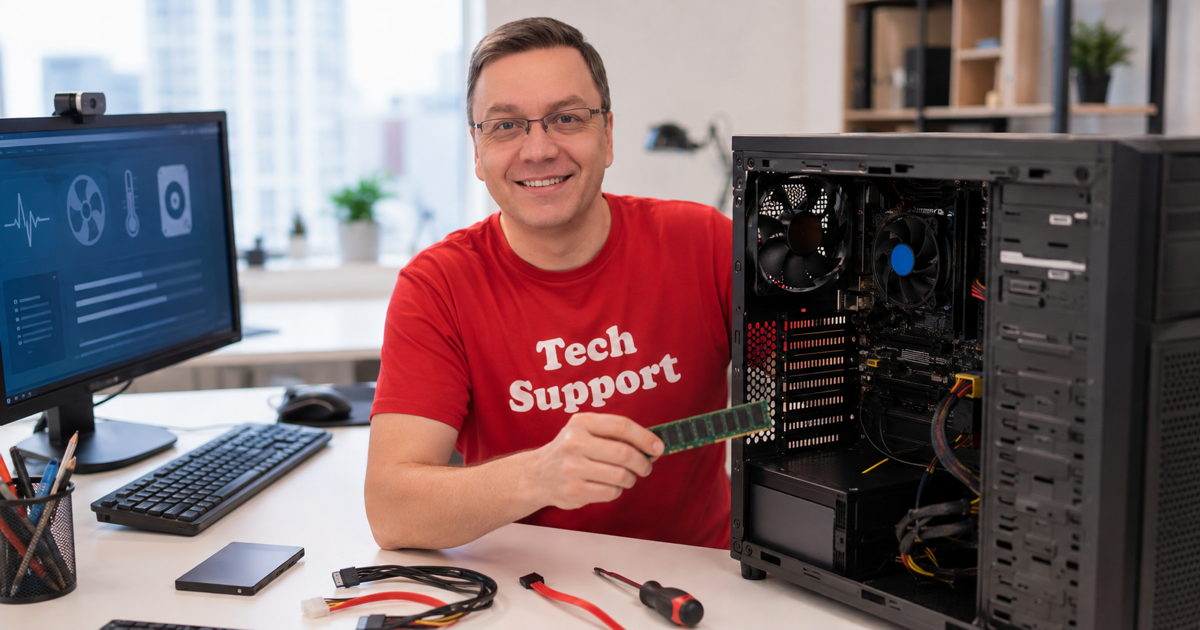
A chipset is the supporting controller on a motherboard that helps the CPU communicate with the rest of the system. Two motherboards can use the same CPU socket and still offer different numbers of USB ports, M.2 slots, expansion options, and overclocking features. In many builds, the chipset is the reason.
Does this affect you?
This matters when you are choosing a motherboard, planning upgrades, comparing Intel or AMD board names, or trying to understand why a PC supports one feature but not another. The chipset is fixed to the motherboard, so it is a choice you make when buying the board, not a part you upgrade later.
What a chipset actually controls
Think of the chipset as a traffic controller for everything that is not connected directly to the CPU.
- It manages shared data paths for extra storage, USB controllers, additional expansion slots, and other onboard features.
- It affects how many drives, ports, and PCIe lanes the motherboard can expose beyond the CPU direct connections.
- It may decide whether CPU overclocking is allowed. Intel Z-series boards usually unlock it, while many H and B boards do not; AMD is generally more flexible depending on platform.
- It influences connectivity options such as faster USB, extra M.2 slots, built-in Wi-Fi, and high-speed add-in support.
- It is soldered to the motherboard. Replacing the chipset means replacing the motherboard.
How to read chipset names
Both Intel and AMD use letter-and-number names that roughly signal product tier and generation.
- Intel examples include H610, B760, and Z790. H is usually entry level, B is mainstream, and Z is the high-end tier with the most features and overclocking support.
- AMD examples include A620, B650, and X670. A is entry level, B is mainstream, and X is the more feature-rich tier.
- The number usually points to the generation. Compare compatibility against the exact CPU and board, because the same letter tier can change across platforms.
- To identify your own chipset, check the motherboard model in CPU-Z, system information tools, or the board manufacturer support page.
- Buy the tier you need. A mainstream chipset is enough for most people who are not overclocking or filling many storage and expansion slots.
A few things worth knowing
PCIe lanes are the resource behind many limits
Extra M.2 drives, USB controllers, capture cards, and other devices consume PCIe bandwidth. Higher-tier chipsets usually provide more lanes or more flexible sharing, which is why they can support more high-speed devices at once.
Chipset choice can limit CPU choice
The socket and chipset are tied to a CPU platform. Always check the motherboard official CPU support list before buying either part, especially around new generations or BIOS update requirements.
Budget boards skip features many builds never use
If you need one graphics card, one or two drives, and normal USB connectivity, a B-series board often makes more sense than paying for the top chipset.
Sources
- Intel – What Is a Chipset? (2025)
- AMD – Chipset Comparison Guide (2025)
- ASUS – Understanding Motherboard Chipsets (2024)